
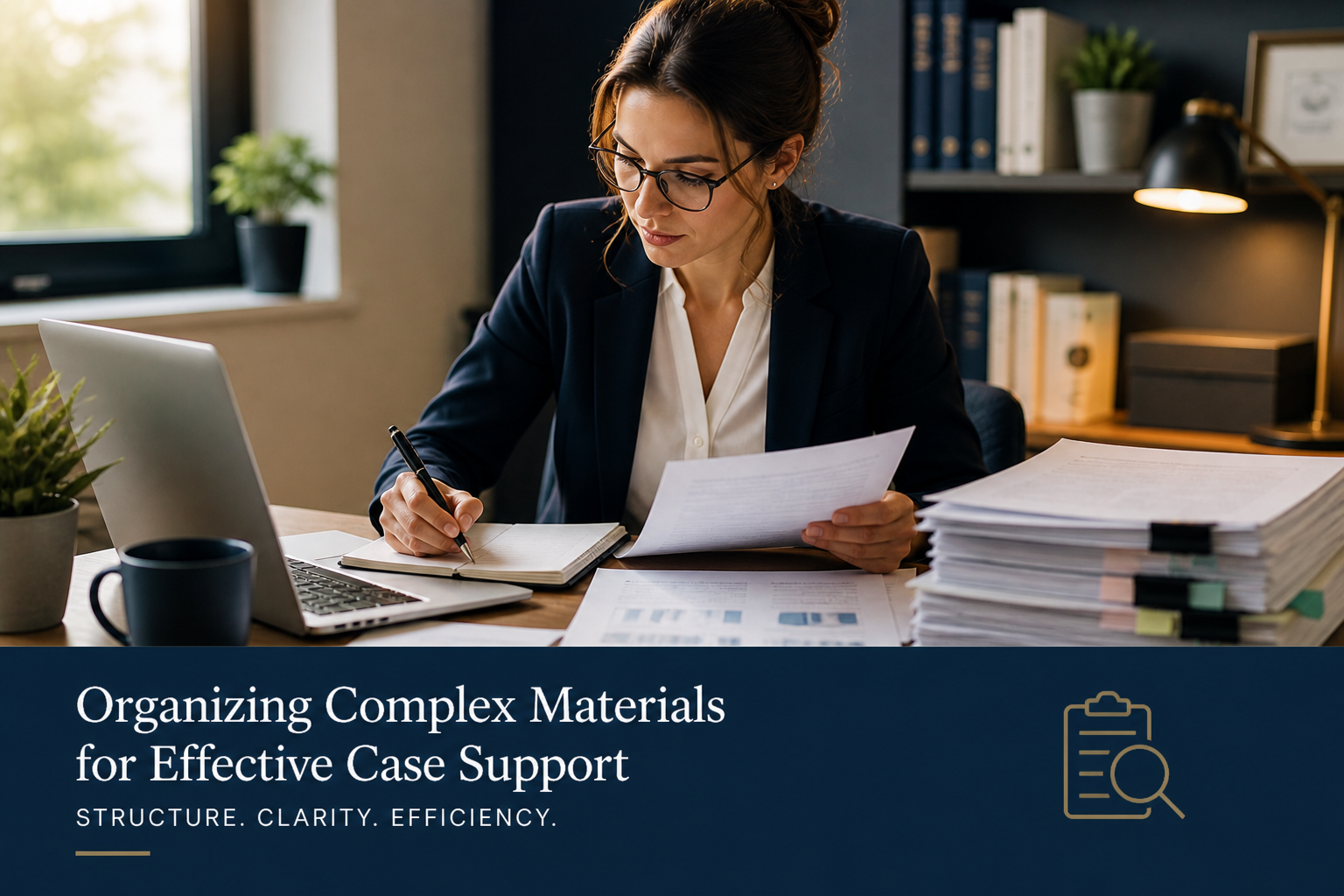
Managing large volumes of information is a common challenge in legal and professional environments. Case materials often include multiple document types, timelines, correspondence, and supporting records that must be reviewed and referenced efficiently. Without clear organization, even relevant information can become difficult to locate and use.
An effective approach begins with establishing a consistent structure for all materials. Documents should be categorized based on their function, such as correspondence, evidence, reference materials, and administrative records. This allows for quicker access and reduces the time spent searching through unrelated information. Consistency in naming conventions and file formats further improves usability across teams and engagements.
Clarity is equally important when handling timelines and sequences of events. Organizing materials in chronological order helps identify key developments and relationships between documents. When timelines are clearly defined, it becomes easier to understand the progression of a matter and reference specific points when needed.
In addition to organization, document review plays a critical role. Reviewing materials with attention to detail ensures that information is accurate, complete, and relevant. This process also helps identify gaps, inconsistencies, or duplicate records that may affect the overall quality of the materials.
Well-organized materials support more efficient collaboration. When documents are structured clearly, multiple parties can access and understand the information without confusion. This reduces miscommunication and allows professionals to focus on analysis and decision-making rather than administrative tasks.
Maintaining organized records is not a one-time effort but an ongoing process. As new information is added, it should be integrated into the existing structure in a consistent manner. Regular updates and reviews help ensure that materials remain current and usable over time.
A disciplined approach to organizing complex materials ultimately improves clarity, efficiency, and reliability. In environments where accuracy and accessibility are essential, well-managed information becomes a critical component of effective case support.